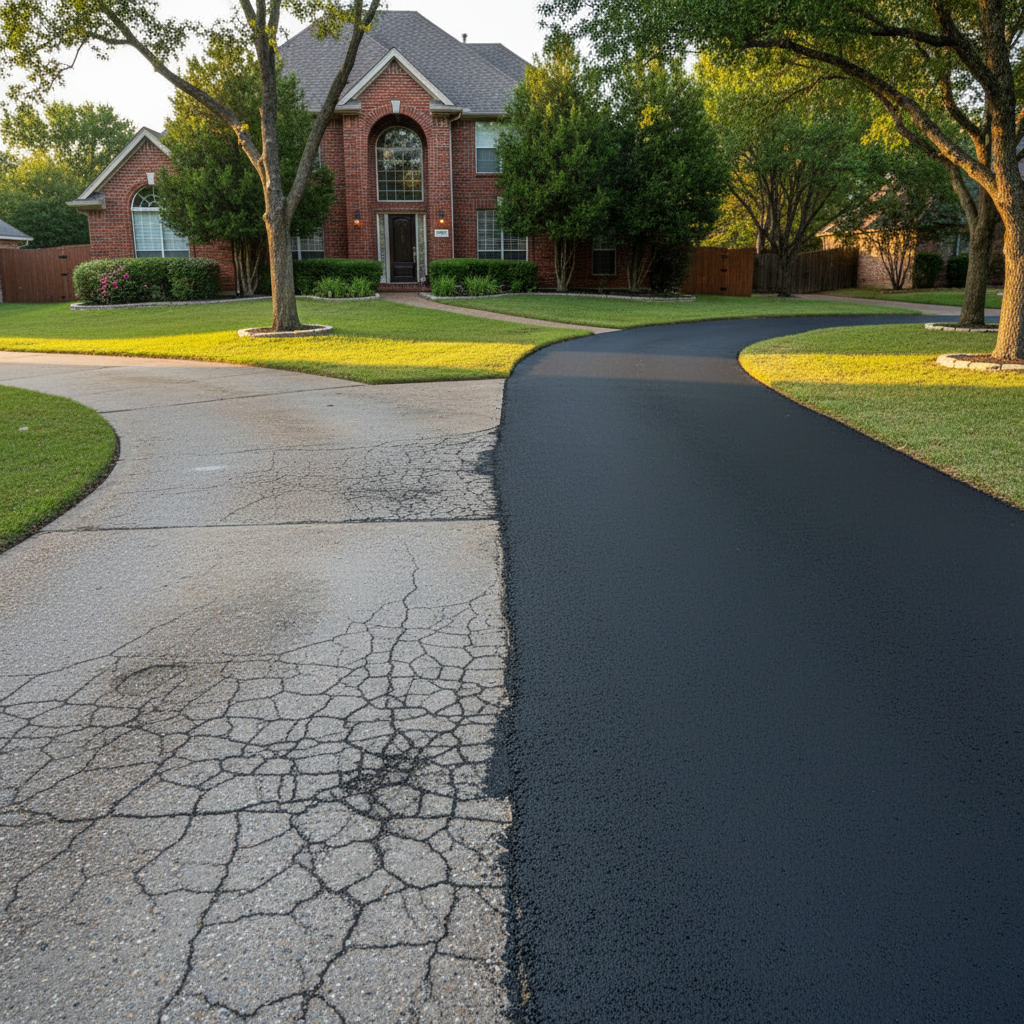
Your driveway's seen better days, huh? Maybe a few potholes from that last crazy summer storm, or some cracks creeping in. When it's time to fix those spots, you've generally got two main ways to go about it: infrared asphalt patching or the more traditional saw-cut and remove method. I see folks in Dallas ask about this all the time, so let's talk straight about what each one means for your property.
Infrared Asphalt Patching: The Quick Fix
Infrared patching is pretty slick. It uses an infrared heater to warm up the existing asphalt around the damaged area. We're talking about heating it up to about 300 degrees, making it pliable again. Then, we rake out the old, tired asphalt, add some fresh material, and compact it all together. It's almost like melting the old and new into one seamless piece.
The Good Stuff About Infrared
- Looks Cleaner: When it's done right, you get a patch that blends in really well with the surrounding pavement. It's often hard to tell where the old asphalt ends and the new begins. For a residential driveway, that's a big plus for curb appeal.
- Faster: This method is generally quicker to do. Less cutting, less hauling away debris. That means less disruption for you and your family.
- Less Waste: Since we're reheating and reusing some of the existing material, there's less waste going to the landfill. That's good for everyone.
- Cost-Effective for Small Patches: For smaller, isolated areas, infrared can sometimes be a bit cheaper upfront because it's less labor-intensive and uses less new material.
The Not-So-Good Stuff About Infrared
- Depth Matters: Infrared works best when the damage isn't too deep. If you've got a really deep pothole that goes all the way through the asphalt base, it might not be the best solution.
- Quality Depends on the Existing Asphalt: If the surrounding asphalt is really old, brittle, or has structural issues, simply reheating it might not give you the best long-term bond. You're essentially patching old with new, but the old still has its weaknesses.
- Durability Can Vary: While it can be durable, it might not always stand up to the extreme freeze-thaw cycles we sometimes get here in North Texas as well as a full depth repair would, especially if the base underneath is compromised.
Saw-Cut & Remove: The Traditional Workhorse
This is the method most folks picture. We use a saw to cut out a clean, rectangular section around the damaged area. Then, we dig out all that old, broken asphalt, down to the base. We clean out the area, make sure the base is solid, and then pour in fresh, hot asphalt, compacting it thoroughly. It's a full-depth repair.
The Good Stuff About Saw-Cut & Remove
- Superior Durability: This is the big one. By removing all the bad stuff and replacing it with fresh asphalt, you're getting a much stronger, more structurally sound repair. It's built to last, especially important with the heavy clay soils we have around Dallas that can really shift things around.
- Addresses Base Issues: If the problem started with a weak base – which is often the case with potholes – this method lets us fix that base before laying down new asphalt. Infrared can't really do that.
- Works for Any Damage: Deep potholes, wide cracks, alligator cracking – this method handles it all, no matter how bad it is.
- Clear Edges: The saw-cut edges create a strong, clean seam for the new asphalt to bond to.
The Not-So-Good Stuff About Saw-Cut & Remove
- More Noticeable Patch: Even with careful work, you'll usually see the outline of the patch. It's a clear rectangle or square of newer asphalt against the older stuff. It's a trade-off for durability.
- More Expensive: Generally, this method costs more. You're using more new material, and it's more labor-intensive to cut, remove, and haul away debris.
- More Disruptive: It takes longer, creates more noise, and generates more waste.
So, What's My Recommendation for Dallas Homeowners?
Look, for a quick, cosmetic fix on a minor surface crack or a very shallow pothole, especially if your driveway is relatively new and in good shape otherwise, infrared patching can be a decent option. It's fast, looks good, and is less invasive.
But if you're asking me, for most situations here in Dallas – especially with our crazy weather, the heavy traffic your driveway sees, and those shifting clay soils that can cause real problems underneath – I almost always lean towards the saw-cut and remove method for asphalt patching. Yes, it costs a bit more upfront, and you'll see the patch, but you're getting a repair that's going to last. You're fixing the problem, not just covering it up.
When Apex Asphalt Solutions does a repair, we're thinking about the long haul. We want to make sure you're not calling us back in six months for the same issue. A full-depth repair addresses the root cause, giving you peace of mind and a more durable surface for years to come. It's an investment that pays off in the long run.
Don't just slap a band-aid on it if the problem goes deeper. Get it fixed right the first time.